
The treasurer is in possession of accounting software. The president owns an entire document library that governs the organization in cloud storage. Residents email messages are scattered across individual inboxes. Someone has photos of violations on their phone. Board members also have the password for the community’s website.
Technically, everything exists.
Finding the right one is a different matter.
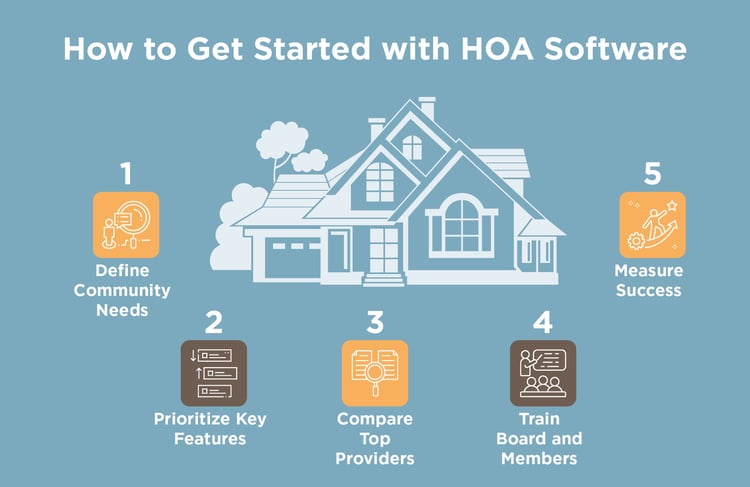
The administrative complexity of the homeowners’ association run on its own can become more complex in time. It is possible to implement a small solution at a particular moment. One problem can be resolved with a spreadsheet. Another issue is resolved by an online chat. The board can then implement online payments sharing storage, accounting software, a site and a third system to communicate with residents.
At the end of the day, volunteers will spend nearly equally time maintaining the tools as managing the community.
The Problem Isn’t Self-Management
Self-management gives an association complete control over its operations. Board members aren’t paid administrative staff, but volunteers.
They are still required to collect assessments, keep records about the owners, keep records of expenditures, talk to residents, and report violations. They organize files, create documents and maintain archives.
Good HOA management software should reduce that administrative load without taking control away from the association.
Perfect HOA adopts a cloud-based solution to address this issue by combining unit records, finances and payments, communications documents, resident portals and meeting record documents.
Imagine what happens to homeowners when they move.
Rather than updating one spreadsheet with an owner’s address, updating another list of contacts, checking out the payment system separately or manually modifying access to websites, central records can be helpful for all administrative functions.
The Treasurer should not be required to reconstruct the Financial Picture
HOA finances could cause an issue similar to that when the information is fragmented.
Transactions in banking are handled at a single place. Assessment payments may arrive in another place. The budget can be another spreadsheet. Treasurers must come up with an answer when someone asks about the actual expenses against the annual plan.
HOA accounting software is more effective when bookkeeping is linked to the association’s daily business.
Perfect HOA can sync bank and card transactions with Plaid, classify transactions, and create reports such as Profit and Loss, Budget vs. Actual as well as cash flow. Operating, reserve and special-assessment money are also tracked in separate ways.
It’s essential to realize that HOA accounting doesn’t mean producing an annual total. Boards may need to know what is in the reserve fund or if they are on the budget for landscaping.
The simpler the answers are to find and retrieve, the less dependent a community becomes to one individual’s private spreadsheet.
Residents shouldn’t be required to inquire for answers to everything
Centralization can improve the resident experience.
Imagine the most commonly asked questions that an HOA receives. Where are the community’s documents? Does my account have a payment? What do I need to know about the most recent news? Where can I get information about the association?
A useful HOA website builder will create more than a public-facing homepage. Perfect HOA integrates the community site with a resident’s portal to keep the owner’s information and documents in sync with the management system.
This eliminates the requirement of keeping a set of information for a board and another for the website.
Additionally, it gives residents an obvious resource to check before sending an email to any board member who is a volunteer for something that already exists.
If things go wrong, it is important to keep good record.
The most reliable test for an HOA’s administration system usually months after the fact.
A resident contests the violation. Someone questions whether a notice was even sent. A new board wishes to learn the rationale behind an old decision. An auditor needs financial information. The treasurer suddenly quits.
At that point, memory won’t be enough.
Perfect HOA maintains communication histories including delivery information, documents, and timelines for violations. A violation could be documented with photographic evidence, notices, escalation history and associated fines, rather than being constructed from fragmented emails after a dispute occurs.
Board meetings can also produce documents that need to be preserved. AI-generated meeting minutes could ease the work of manually converting the minutes of a long-running meeting into usable written record.
Self-management of a HOA requires people to make choices. Software shouldn’t replace that responsibility.
It is recommended to eliminate any unnecessary investigations.
When financial records such as resident information, documents, communications, payments violations, documents, and community access reside together, board members spend less time asking “Who is this?” and more time dealing with the issue which requires their expertise.
It could be the most important automation to a board of volunteers.